How Gutter Installation Protects Your Home Through Every Season


A house does not lose its value all at once. More often, it happens by inches. Water seeps where it should not, wood stays damp longer than it should, soil shifts a little at a time, and paint fails years earlier than expected. Many homeowners focus on roofing, siding, windows, and insulation, yet the quiet system that manages rainwater often gets ignored until there is visible damage. That system is the gutter line, and when it is planned and installed correctly, it does far more than keep water from pouring off the roof edge.
Proper Gutter Installation protects the structure from top to bottom. It helps preserve fascia boards, soffits, exterior walls, landscaping, basement walls, and the foundation itself. It also changes how a home performs throughout the year. The risks are different in spring than they are in winter, and a gutter system that works in one season but fails in another is not doing its job.
Homeowners sometimes treat gutters as a minor accessory, almost decorative. In practice, they are part of the home’s water management system. If you have ever seen a house with rotted trim behind the gutters, splash marks on the siding, mulch washed into the driveway, or a wet basement after a storm, you have seen what happens when that system is undersized, poorly sloped, loosely fastened, or simply missing where it is needed most.
Water always wins if you give it time
The reason gutters matter so much comes down to concentration. A roof collects water over a broad surface area and then sends it toward a relatively small edge. Even a moderate rain can produce a surprising amount of runoff. On a larger roof plane, that volume increases quickly. Without gutters, all of that water drops directly near the base of the home. With a weak system, water still escapes in the wrong places.
A properly installed gutter system captures roof runoff and channels it to downspouts that discharge away from vulnerable areas. That sounds simple, but there is real judgment involved. The installer has to consider roof pitch, valley locations, fascia condition, overhang depth, local rainfall intensity, the number and placement of downspouts, and where discharged water will go after it leaves the downspout. A gutter that empties into a low spot near the foundation solves one problem and creates another.
This is why homeowners who replace siding, regrade the yard, or waterproof a basement often still see recurring moisture trouble if the gutters were never addressed. Water management works only when the chain is complete, from roof to ground to drainage path.
Spring exposes weak spots fast
Spring has a way of revealing every shortcut. Winter debris, thaw cycles, and seasonal rain all put gutters under stress. If the system is loosely attached, pitched incorrectly, or clogged at key points, spring runoff will show it almost immediately.
One of the most common spring issues is overflow at inside corners and roof valleys. These are high-volume areas, and they need enough capacity to handle concentrated runoff. I have seen otherwise decent gutter systems fail because the installer treated every roof edge the same. A long, open eave might perform fine with a standard setup, while a valley above a front entry can dump far more water into a short section than expected. In that spot, gutter size, outlet size, and downspout placement matter a great deal.
Spring is also when homeowners notice soil erosion around flower beds and walkways. What often looks like a landscaping problem is really a drainage problem. Water spilling over one section of gutter can carve channels in mulch and topsoil after only a few storms. Over a season, that runoff can expose roots, stain hardscaping, and keep lower wall sections consistently wet.
If your region experiences heavy spring storms, seamless gutters tend to perform better over time because they have fewer joints where leaks can develop. That does not make sectional systems automatically bad, but it does raise the importance of installation quality. Sealants age, joints move, and corners are frequent failure points.
Summer tests capacity, not just durability
People often associate gutters with rainy seasons, but summer can be just as demanding. Thunderstorms can dump large amounts of water in a short period. When that happens, the issue is not only whether the gutters are intact, but whether they can carry peak flow without backing up or overshooting.
This is where sizing becomes practical, not theoretical. In many homes, 5-inch gutters with standard downspouts are adequate. On larger roofs, steep roofs, or homes in areas with intense rainfall, 6-inch gutters and larger downspouts may be the wiser choice. The difference in cost is often modest compared with the cost of correcting water damage later.
Summer also highlights problems with gutter slope. A gutter can look straight from the yard and still hold standing water. That standing water attracts mosquitoes, accelerates corrosion in certain materials, and adds weight to the run. Over time, weight and heat expansion can loosen hangers and pull sections out of alignment. Good Gutter Installation includes proper pitch, secure fastening into solid backing, and expansion considerations where needed.
Another summer issue is mildew and staining on siding. This often traces back to repeated splashing or overshoot during storms. Water that clings to the roof edge because of shingle overhang, drip edge issues, or gutter placement can run behind the gutter rather than into it. Homeowners may replace gutters and still see staining because the interface between roof edge and gutter was never corrected. The best installers pay attention to that transition instead of treating the gutter as a stand-alone product.
Autumn is where maintenance habits start to matter
Fall fills gutters with leaves, twigs, seed pods, and roof granules. Even a well-designed system can struggle if debris blocks the water path. The key difference is that a good installation makes maintenance easier and reduces the odds of chronic clogging.
Tree cover changes the discussion. A house surrounded by mature oaks or pines has different needs than one on an open lot. In heavy-leaf areas, wider gutters, properly sized outlets, and thoughtfully chosen guards can help, but none of these are one-size-fits-all solutions. Some gutter guards perform well against broad leaves but allow small debris to build up. Others reduce maintenance frequency but complicate cleaning. The right call depends on roof type, tree species, wind exposure, and how easily the gutters can be accessed.
Autumn is also the season when poorly fastened gutters begin to sag under debris weight. I have seen long runs bow enough that water pools in the middle, then freeze later and worsen the distortion. That kind of problem usually traces back to hanger spacing, weak fascia, or fasteners that were installed into compromised wood. A Gutter Installation new gutter attached to rotten fascia is not a durable repair. It is a postponement.
Homeowners sometimes assume the visible gutter is the only concern, but the support material behind it matters just as much. During installation, fascia and soffit condition should be checked carefully. If there is soft wood, staining, or signs of prior overflow, that needs to be addressed before the new system goes up.
Winter is when small mistakes become expensive
Winter creates the harshest conditions for gutters in many climates. Snow load, ice formation, freeze-thaw cycles, and blocked drainage can turn a minor flaw into structural damage.
The most obvious winter hazard is ice. Gutters themselves do not usually cause ice dams, but they can be affected by them. Ice dams start when heat escapes through the roof, melting snow above while lower roof sections remain cold enough to refreeze the water. That ice can back water up under shingles and into the house. A weak or clogged gutter worsens the situation by limiting drainage and adding ice weight at the eaves.
Secure attachment matters a great deal in winter. Once a gutter fills with slush or refrozen runoff, weight increases fast. If hangers are too far apart, if spike-and-ferrule systems are loose, or if the fascia is compromised, sections can detach. That is not just a drainage problem. It can damage roofing edges, tear off trim, and create a safety hazard below.
Winter also tests downspout discharge. If the downspout empties onto a walkway, driveway edge, or poorly drained area, refreezing can create dangerous ice patches. A well-planned installation looks beyond the gutter run and considers where water will travel in cold weather. Sometimes that means extensions, splash blocks, underground drains, or a revised discharge point.
Signs your gutter system may not be ready for winter
- Water stands in the gutters more than a day after rain.
- Hangers are loose, bent, or widely spaced.
- Downspouts discharge right beside the foundation.
- Fascia boards show peeling paint, staining, or soft spots.
- Icicles form repeatedly along areas where overflow is visible.
Materials matter, but workmanship matters more
Homeowners often begin by asking which gutter material is best. That is a fair question, but it can overshadow the larger issue. Even a premium material will underperform if installed badly.
Aluminum is common for good reason. It is relatively lightweight, cost-effective, rust-resistant, and available in many colors. For most homes, it strikes a practical balance between cost and longevity. Steel is stronger, but it can be more prone to rust if the protective finish is damaged. Copper is durable and attractive, though it comes at a much higher price and is usually Gutter Installation chosen for architectural reasons as much as performance. Vinyl is inexpensive, but in my experience it is less forgiving in climates with strong sun, freezing winters, or wide temperature swings. Joints can become brittle over time, and sagging is more common if support is not excellent.
What separates a durable system from a frustrating one is usually less about the metal and more about the details. Hanger placement, outlet sizing, corner fabrication, seam quality, downspout support, and proper slope all influence long-term performance. So does how the installer handles transitions around dormers, roof returns, screened porches, and lower roof tie-ins.
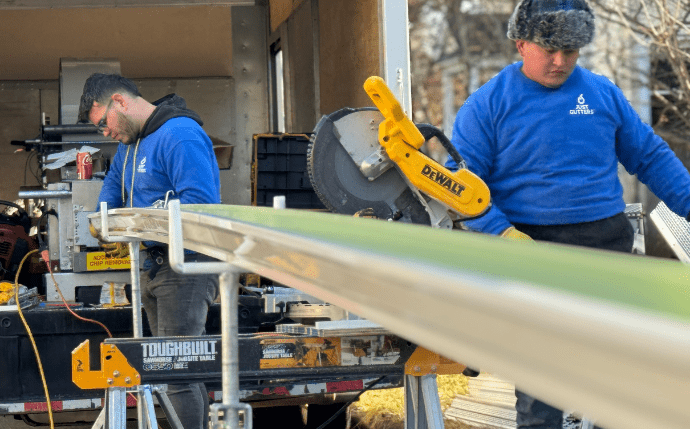
Seamless gutters are popular because they reduce the number of joints along straight runs. Fewer seams usually mean fewer leak points. That said, corners and downspout outlets still need careful work, and those are often the places where failures begin. The machine that forms the gutter is only one part of the job. The installer’s judgment at each detail is what protects the home.
The foundation connection homeowners underestimate
If there is one area where good gutters earn their keep, it is at the foundation. Water that drops repeatedly at the base of a home does not just make the soil muddy. It can alter moisture levels around footings, increase hydrostatic pressure on basement walls, and contribute to settlement over time, especially in clay-heavy soils or areas with poor grading.
I have walked properties where one downspout discharged into a bed against the house for years. The result was not dramatic at first glance. There were no collapsed walls, no major cracks. Instead, there was a familiar pattern: musty basement odor, minor efflorescence, a sticky door frame nearby, and fine stair-step cracking in mortar joints. Each symptom looked manageable on its own. Together, they told the story of chronic water concentration.
Good Gutter Installation reduces that concentration. It is not a substitute for grading or foundation waterproofing, but it supports both. Think of it as the first and most visible line of defense. If you fail there, everything downstream has to work harder.
Installation choices that have outsized consequences
A few decisions during installation have a disproportionate effect on performance. These are not glamorous details, but they are often the reason one system lasts and another becomes a problem within a few seasons.
Downspout placement is one of them. It is tempting to minimize the number of downspouts for appearance, but fewer is not always better. Long runs need enough drainage points to prevent overflow during heavy rain. The best layout balances water handling with curb appeal, often by tucking downspouts near corners or architectural breaks without underbuilding the system.
Another is apron and drip edge compatibility. If water can slip behind the gutter, the fascia stays wet and rot begins quietly. That issue is common on older homes where previous roof or gutter work left gaps at the eave. Correcting it may require more than simply hanging a new gutter.
Fasteners are another overlooked detail. Hidden hangers with screws generally outperform older spike systems, especially over time. The screw should bite into sound backing, not just skim compromised trim. On older homes, that sometimes means replacing sections of fascia before installation proceeds.
Then there is discharge control. A downspout that ends too high above grade can cause splashback and erosion. One that empties into an underground drain of unknown condition can hide clogs until water backs up at the foundation. Every part of the water path should be visible, intentional, and maintainable.
Not every house needs the same solution
One reason gutter advice gets muddled is that houses vary so much. A single-story ranch with generous overhangs behaves differently from a tall colonial with steep roof sections and multiple valleys. A home on sandy soil with strong positive grade has a different risk profile than one on clay with a barely sloped yard. Even neighborhood tree cover changes the equation.
That is why blanket recommendations can disappoint. Some homes benefit from oversized gutters. Others mostly need better downspout extensions and a correction to slope. Some need guards. Others need access for regular cleaning instead. On certain roof lines, adding a diverter or adjusting a flashing detail solves chronic overshoot better than replacing the whole system.
The right installer should talk through those distinctions rather than jump straight to a price. A thorough assessment usually includes roof geometry, current drainage patterns, fascia condition, previous staining or erosion, and whether the home has a basement, crawl space, or slab. Each of those affects the stakes.
What homeowners should ask before hiring
Choosing a contractor for Gutter Installation is partly about product quality, but mostly about competence and clarity. The bid should explain more than color and linear footage. It should address sizing, downspout count, fastening method, disposal plan for old materials, and whether any wood repair is included or excluded.
A few questions can quickly reveal whether an installer is thinking like a water management professional or just a metal hanger.
- How are you determining gutter size and downspout placement for this roof?
- Will you inspect and report any fascia or soffit damage before installation?
- What fastening system do you use, and how far apart are the hangers spaced?
- Where will the downspouts discharge, and how will that affect the foundation and walkways?
- What maintenance should I expect based on my roof and tree conditions?
Strong answers are usually specific. Vague assurances are not enough. If the conversation never touches drainage at grade, that is a missed warning sign.
Long-term value is measured in avoided repairs
Homeowners sometimes hesitate at the cost of replacing or upgrading gutters because the system feels peripheral. Yet the value of a sound installation often appears in what never happens. The basement stays drier. The paint holds longer. The mulch remains in place after storms. Fascia boards do not soften. Walkways stay safer in winter. Foundation movement risks are reduced, not eliminated, but reduced in a meaningful way.
There is also a practical resale benefit. Buyers notice moisture stains, musty smells, and drainage trouble quickly. Even when those issues are minor, they raise questions about maintenance history. A visible, well-installed gutter system with sensible downspout routing signals that the home’s exterior has been managed thoughtfully.
For homeowners planning larger exterior projects, gutters deserve an early place in the conversation. New siding, fresh paint, improved landscaping, and basement finishing all become more vulnerable if rainwater is not controlled first. Water is patient. It will exploit the weak point you leave behind.
A good gutter system does not call attention to itself. That is part of its value. In spring it carries runoff cleanly, in summer it handles downpours, in autumn it resists clogging and sagging, and in winter it stands up to cold-weather stress while directing water away from the home. When that system is sized well, attached securely, and integrated with the house and site conditions, it protects far more than the roof edge. It protects the lifespan of the entire building.
Just Gutters LLC
Address: 262 Main St, Hackettstown, NJ 07840
Phone number: +12013319454
FAQ About Gutter Installation Hackettstown
Can I install a gutter myself?
Yes, you can install gutters yourself. DIYers typically use aluminum or vinyl sections from home improvement stores. The project requires basic tools, precise measuring, and comfort working on ladders. Key steps include snapping a chalk line for a slight slope (1/4 inch per 10 feet toward downspouts), securing hangers every 2 feet, and caulking all joints securely.
How much does body contouring usually cost?
The Home Depot typically charges between $1,000 and $3,600 for a standard professional gutter installation on a typical single-family home with 200 linear feet of gutters. Calculated on a per-foot basis, the cost usually ranges from $5 to $18 per linear foot, highly dependent on the material you select.
How much does a 40 ft seamless gutter cost?
A 40 ft seamless gutter run will cost between $240 and $1,120+ fully installed, depending on the material you choose. Because seamless gutters require specialized on-site fabrication machines, they are rarely sold as DIY kits and are priced per linear foot.