What Home Inspectors Notice About Gutter Installation
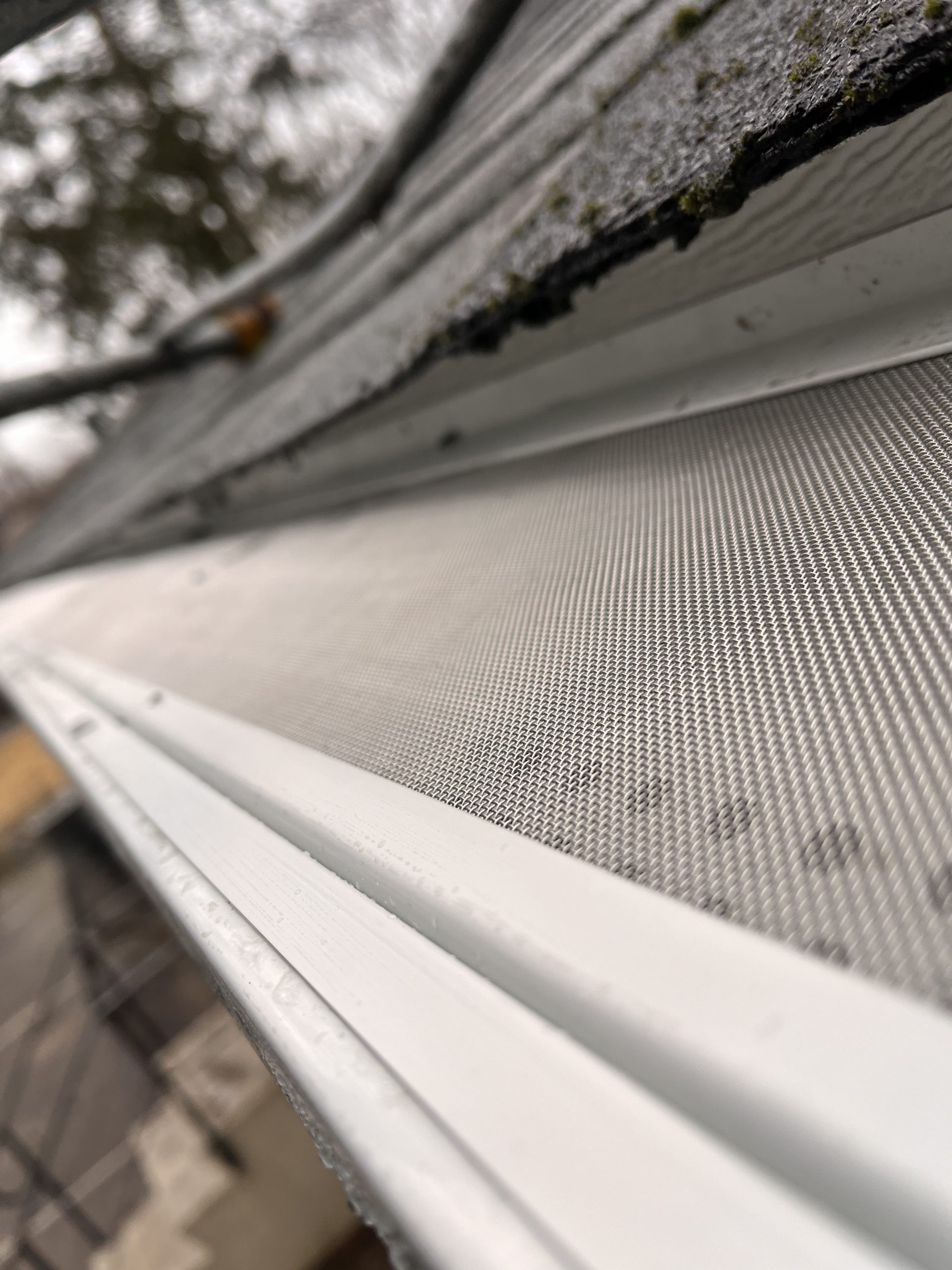


Most people do not think much about gutters until something goes wrong. A stain appears on the siding. Mulch starts washing out of the beds. The basement smells damp after a hard rain. Then someone looks up and realizes the gutter system has been quietly failing for years.
Home inspectors notice gutters early because gutters affect so many parts of a house at once. A poorly installed system does not just spill water over the edge. It can shorten the life of fascia boards, loosen soffits, rot trim, erode soil, stain masonry, and increase moisture around the foundation. On houses with basements or crawlspaces, that extra roof runoff can become an indoor problem sooner than owners expect.
When inspectors evaluate gutter installation, they are not grading curb appeal. They are tracing water. They want to know where it starts, how it moves, where it lands, and what signs suggest the path is wrong. Good gutter work often looks ordinary. Bad gutter work leaves clues everywhere.
The first thing they see is whether the system fits the roof
A house can have brand new gutters and still have the wrong gutters. That is one of the first disconnects inspectors spot. The system has to match the roof area, roof pitch, local rainfall, and the architecture of the home. A long, steep roof plane sheds a surprising amount of water in a storm. If the gutters are undersized or the downspouts are too few, overflow is almost guaranteed.
On a modest one story ranch in a mild climate, a standard 5 inch K-style gutter may be perfectly serviceable. On a taller house with large roof sections feeding a few concentrated valleys, the same setup may struggle during heavy rain. Inspectors often pay close attention to corners below roof valleys because those spots show the stress first. If they see splash marks, wash lines, or repeated overflow staining at those areas, they start asking whether the original Gutter Installation was designed for appearance more than performance.
They also notice when one section of the house clearly needed larger capacity than another. Builders and installers sometimes use a uniform gutter profile around the whole home because it looks neat and keeps costs down. Water does not care about consistency. One side of the house may receive far more runoff than the rest.
Pitch tells a bigger story than most owners realize
From the ground, a gutter can look straight and tidy. That does not mean it drains well. Inspectors are trained to catch subtle pitch issues because standing water leaves patterns. You see residue lines inside the gutter. You see sagging in the middle of long runs. You see ice damage in cold climates where trapped water repeatedly freezes. You sometimes hear the owner mention that the gutters drip for hours after a storm.
A gutter needs enough slope to move water toward the downspout, but not so much that it becomes visibly slanted and awkward. In practice, the pitch is usually slight, often around a quarter inch for every 10 feet, though actual field conditions vary. The point is not the exact number in isolation. The point is reliable drainage.
Inspectors often find trouble on long front elevations where appearance matters most. Installers sometimes flatten the run so the gutter line looks perfectly level from the street. That can work if the system is carefully planned with multiple outlets. It fails when there is only one downspout at the end and no real fall to feed it. Water then ponds, debris settles, joints stay wet, and the gutter ages fast.
A well-pitched gutter is easy to ignore. A poorly pitched one becomes a maintenance machine.
Fasteners and support reveal whether the installer was thinking long term
One of the easiest ways to judge gutter workmanship is to look at how the gutter is attached. Spacing, fastening method, and support at stress points all matter. Inspectors pay attention to whether the system feels secure, whether there is movement at the fascia, and whether spikes, ferrules, or hidden hangers were used appropriately.
Older spike-and-ferrule systems are common and not automatically defective, but inspectors know they loosen over time, especially on houses where fascia has softened from years of moisture. Hidden hangers with screws tend to hold better when properly installed, but even a modern hanger system will fail if the screws are sunk into rotted wood or spaced too far apart.
This comes up often after a winter with snow load or after a season of neglected debris. A gutter full of wet leaves is heavy. Add ice to that, and weak attachment points show themselves quickly. Inspectors may see sections pulling away from the roofline, nails backing out, or fascia boards bowing. Those are not just gutter issues. They suggest the installation did not account for real use conditions, or that a decent installation has been undermined by deferred maintenance and hidden wood damage.
Corners and downspout outlets deserve extra scrutiny. Those are stress zones. If the gutter is flimsy there, or if seams are opening, inspectors read that as a sign of either poor support or recurring overflow.
Water has to land in the gutter, not jump past it
Many gutter problems start before the water ever reaches the trough. Inspectors often notice drip edge and roof edge details because those small pieces determine whether runoff enters the gutter correctly. On some homes, especially older ones with replacement gutters added years after the roof was installed, the shingles may extend too far or not far enough. The drip edge may be missing, tucked incorrectly, or buried behind the gutter lip.
When that happens, water can curl under the shingles or run behind the gutter instead of into it. The symptoms are familiar: rotted fascia, peeling paint, stained soffits, and moisture where owners insist the gutters are “not leaking.” Technically, they may not be leaking at the seams. The water path is simply wrong.
Inspectors also watch for splash-over caused by steep roof pitch. On a fast roof, water can shoot over the front edge during intense rain if the gutter sits too low or too far away from the drip line. This is especially common where installers tried to preserve a straight visual line but missed the actual trajectory of runoff from the roof edge.
A practical installation balances aesthetics and capture. The best-looking gutter is not the one that disappears from view. It is the one that quietly catches water in ugly weather.
Downspouts tell inspectors where the real drainage problem may be
A gutter can collect water perfectly and still fail the house if the downspouts dump it in the wrong place. Inspectors spend a lot of time following downspout discharge because the consequences show up in grading, siding, hardscaping, and below-grade spaces.
If a downspout terminates right at the foundation, or only a foot or two away, that raises concern. The actual risk depends on soil type, slope, roof area, and basement conditions, but the principle is simple. Concentrated water should be moved away from the building. Too often, inspectors find a respectable gutter system feeding short splash blocks that shifted years ago, cracked corrugated extensions, or underground drains of unknown condition.
Buried drain lines create a special kind of uncertainty. They can work very well when properly pitched, kept clear, and discharged to daylight or an approved storm system. They can also clog, separate, or collapse without obvious signs until moisture appears in the basement or crawlspace. An inspector cannot always verify the full condition of a buried line during a standard inspection, but they will note clues such as standing water at cleanouts, overflow marks at the top elbow, or soggy soil near the discharge path.
Here are some downspout details inspectors often flag:
- Too few downspouts for the length and roof load of the gutter run.
- Downspouts discharging too close to the foundation.
- Loose straps or poorly secured vertical runs that can pull apart in wind.
- Sharp elbows and improvised offsets that slow flow and trap debris.
- Underground drain connections with no visible discharge point or signs of backup.
That short list covers a large share of real-world drainage complaints.
Seams, end caps, and outlets expose the difference between quick work and careful work
Inspectors do not need to see active dripping to know where a gutter system is likely to fail. They look at the seams. They look at the outlets where water enters the downspouts. They look at end caps and miters. These are the places where workmanship becomes visible.
Seamed aluminum gutters are common, serviceable, and often long lasting, but every seam is a future maintenance point. If sealant is smeared heavily on the outside, if joints are misaligned, or if rivets appear haphazard, inspectors read that as rushed work. At outlet holes, they may notice rough cuts or sharp edges that trap leaves and slow drainage. At end caps, they may see signs of repeated resealing, often because the original bond failed or movement loosened the joint.
By contrast, a well-executed installation looks restrained. Cuts are clean. Joints are tight. Sealant is used where needed, not as a cosmetic cover for poor fit. The system appears supported rather than forced into place.
This is one reason seamless gutter systems remain popular. They reduce the number of joints along straight runs, which cuts down on leak points. That does not make them flawless. Corners, end caps, and outlets still matter, and a seamless gutter can still be badly pitched or poorly supported. But inspectors generally like any design choice that removes unnecessary failure points.
Soffit and fascia condition often tells the hidden history
Sometimes inspectors learn more from the trim behind the gutter than from the gutter itself. Freshly painted fascia can look fine from the driveway, yet a closer inspection reveals soft wood, old staining, patched sections, or fasteners that no longer hold well. That history matters because a new gutter attached to deteriorated wood is not a lasting installation.
This situation comes up often in older homes. An owner replaces a failing gutter but not the water-damaged fascia behind it. For a year or two, everything appears improved. Then Gutter Installation Just Gutters LLC the new system begins to loosen, sections drift out of alignment, and the old decay keeps spreading. Inspectors tend to call this out because it signals a partial repair where a more durable fix was needed.
Soffits tell a related story. Water running behind gutters often leaves dark streaks, peeling paint, fungal growth, or insect activity around vented soffit panels and trim joints. In some cases, birds or wasps take advantage of gaps opened by moisture-related movement. The gutter may look like the visible problem, but the real issue is the assembly behind it.
A homeowner who hears “gutter concern” during an inspection sometimes expects a simple reseal or cleaning. Inspectors know better than to assume that. Gutters are often the messenger, not the whole message.
Roof geometry creates the edge cases
Not all rooflines are forgiving. Valleys, dormers, second-story discharges onto lower roofs, and complex intersections all create concentrated water flow. These areas are where average installations become marginal and marginal installations become problematic.
A classic example is a two-story house where an upper roof drains directly onto a lower section, and that lower section empties into a standard gutter at the eave. On paper, the lower gutter serves one roof plane. In reality, it is handling two. During a heavy storm, the volume can be far higher than expected, especially if the upper runoff enters near a valley. Inspectors look for impact wear on shingles, granule loss below discharge points, oversized splash guards that were added after the fact, and staining below corners where water regularly overtops the gutter.
Splash guards deserve a brief mention. They can help in problem areas by directing water into the gutter rather than over the edge, but inspectors see many that were installed as a patch over deeper design issues. If the gutter is undersized, badly pitched, or starved for downspout capacity, the splash guard may only move the overflow a few feet down the line.
Complex roof geometry also demands better downspout placement. A long decorative façade with only one downspout at the far end may satisfy symmetry, but it often disappoints in actual rain.
Material choice matters, but installation quality matters more
Inspectors see aluminum, steel, copper, vinyl, and regional variations of each. Every material has strengths and weaknesses. Aluminum is common because it resists rust, is lightweight, and works well for many homes. Steel is stronger but vulnerable to corrosion if coatings fail. Copper lasts well and looks distinctive but costs more and invites greater scrutiny at joints and expansion details. Vinyl is easy to find and easy to install badly, particularly in climates with strong temperature swings.
Still, inspectors rarely treat the material alone as the deciding factor. A well-installed aluminum system generally outperforms a poorly installed premium system. Fastening, pitch, drainage layout, and compatibility with the house matter more day to day than the sales brochure.
Thermal movement is one detail experienced inspectors keep in mind. Long gutter runs expand and contract. If the installer did not allow for movement, joints can separate and hangers can be stressed. This tends to show up over time rather than immediately, which is why homes a few years past installation often reveal more than a brand-new setup.
Maintenance clues help inspectors separate neglect from bad design
A home inspection is not a long-term monitoring program. It is a snapshot. That makes pattern recognition important. Inspectors look for clues that distinguish a design problem from a maintenance problem, although the two often overlap.
If a gutter is full of leaves, any inspector will note that debris can prevent proper evaluation. But they also look at what the debris has caused. Has standing material warped the gutter? Are there overflow stains below the run? Has plant growth taken root in the trough? Are downspouts clogged at the elbows? Those details help identify whether the system merely needs cleaning or whether it has been operating poorly for a long time.
Gutter guards complicate this discussion. Some work reasonably well in the right setting. Some create a false sense of security while debris mats over the top or accumulates in valleys and outlets. Inspectors neither praise nor condemn them automatically. They judge performance. If guards are installed but water still shoots over the edge, or if the gutters are inaccessible and clearly holding debris, the product has not solved the practical problem.
One of the most useful homeowner habits is simply watching the gutters during a hard rain. Inspectors know that live performance tells the truth faster than almost anything else. Where does water spill? Where does it drip long after the rain stops? Which downspouts gush and which barely flow? Those observations often line up exactly with what shows up in an inspection report.
The surrounding site can make a decent gutter system look bad
Gutters do not work alone. Site grading, landscaping, hardscape design, and roof runoff from neighboring sections all shape results. Inspectors sometimes find a perfectly acceptable Gutter Installation that is being undermined by conditions at grade.
A downspout may extend far enough from the foundation, only to empty onto a walkway pitched back toward the house. A buried drain may discharge properly, but the yard may already hold water because of compacted clay soil. Decorative edging, raised planting beds, and heavy mulch can trap runoff at the base of the wall instead of letting it disperse. In freeze-thaw climates, water from poorly directed downspouts can also damage paving, create ice hazards, and work back toward the foundation through repeated saturation.
That is why inspectors write comments that seem broader than gutters alone. They are evaluating the water management chain, not just the metal at the eaves.
What usually separates a reliable installation from one that keeps causing trouble
After enough inspections, a pattern emerges. Reliable systems are not necessarily expensive or elaborate. They are deliberate. Someone accounted for roof area. Someone provided enough downspout capacity. Someone paid attention to pitch, support, and discharge. The trim behind the system was sound when the gutters were installed. The water ends up where it should, well away from the house.
Troubled systems usually have more than one weakness. The gutter may be slightly undersized, slightly flat, and slightly under-supported. The downspout may terminate a little too close to the foundation. The fascia may already be a little soft. None of those alone seems catastrophic. Together, they create the kind of chronic moisture problem inspectors see all the time.
For homeowners, it helps to know what signs are worth acting on early:
- Water spilling over the gutter edge during moderate rain.
- Gutters holding water or dripping long after rainfall ends.
- Downspouts discharging near the foundation or onto back-sloped surfaces.
- Peeling paint, stains, or soft wood at fascia and soffits.
- Repeated basement or crawlspace dampness after storms.
Those symptoms rarely improve on their own.
What inspectors hope owners understand
Gutters sit in an awkward category of home components. They are visible enough to attract cosmetic decisions and easy enough to postpone when budgets are tight. Yet their performance has outsized consequences. A small installation shortcut at the roof edge can become a siding repair, a drainage correction, a foundation moisture issue, or a trim replacement later.
Home inspectors notice that chain reaction because they see the aftermath room by room and wall by wall. They see the swollen baseboard in the finished basement, the efflorescence on the masonry wall, the cracked splash block half buried in mulch, and the sagging gutter directly above it all. The connection is rarely mysterious once you know where to look.
A sound Gutter Installation is not glamorous. It is one of those pieces of a house that earns its value by preventing five other problems from ever starting. That is exactly why inspectors pay attention to it. They are not admiring the gutters. They are reading the house through them.
Just Gutters LLC
Address: 262 Main St, Hackettstown, NJ 07840
Phone number: +12013319454
FAQ About Gutter Installation Hackettstown
Can I install a gutter myself?
Yes, you can install gutters yourself. DIYers typically use aluminum or vinyl sections from home improvement stores. The project requires basic tools, precise measuring, and comfort working on ladders. Key steps include snapping a chalk line for a slight slope (1/4 inch per 10 feet toward downspouts), securing hangers every 2 feet, and caulking all joints securely.
How much does body contouring usually cost?
The Home Depot typically charges between $1,000 and $3,600 for a standard professional gutter installation on a typical single-family home with 200 linear feet of gutters. Calculated on a per-foot basis, the cost usually ranges from $5 to $18 per linear foot, highly dependent on the material you select.
How much does a 40 ft seamless gutter cost?
A 40 ft seamless gutter run will cost between $240 and $1,120+ fully installed, depending on the material you choose. Because seamless gutters require specialized on-site fabrication machines, they are rarely sold as DIY kits and are priced per linear foot.